Lyophilized Peptide Storage Space: Temperature, Moisture, & Light Sulfotyrosine-containing peptides may lose their activity as a result of the desulfation. The trick is identifying that peptides are living molecules that reply to their atmosphere. Temperature modifications, pH changes, light direct exposure, and oxygen can all cause destruction pathways that jeopardize your speculative outcomes. Peptides are effective research tools that can open new explorations in your laboratory.
Proper Storage Space Methods
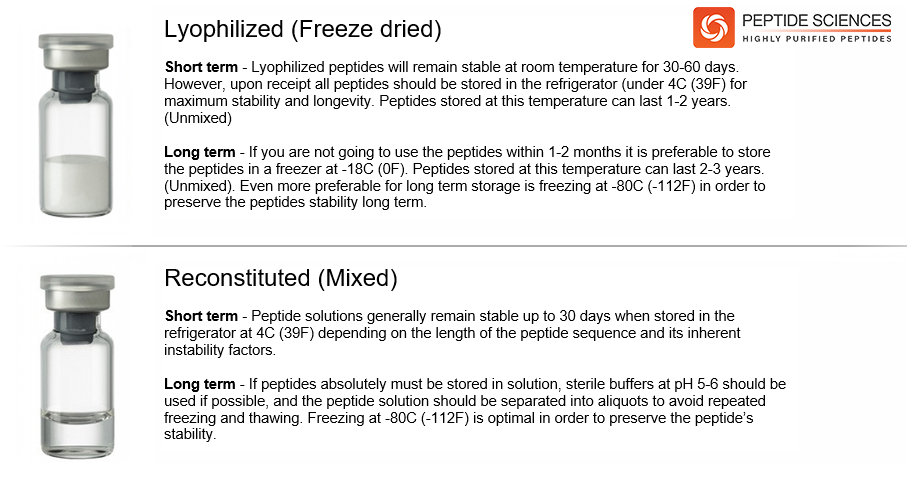
As soon as a peptide has been reconstituted, refrigerated storage is typically dealt with as the common finest practice since water introduction minimizes stability. It is essential to lessen light exposure even throughout handling and reconstitution treatments. Avoid bright fluorescent laboratory lights that can create peptide malfunction before your tests have even begun, and instead operate in locations with poor lights. Store lyophilised peptides at minus 20 ° C for long term storage space or 2 to 8 ° C for short term storage. Unlike little molecule compounds, peptides include responsive functional groups and peptide bonds at risk to environmental stressors that jeopardize molecular structure. Trick variables are peptide sequence, presence of sensitive deposits (e.g., Met, Cys, Trp), formulation, storage temperature level, and direct exposure to dampness, light, or oxygen. Specifically, some research studies have explained that modified peptides, such as those bound to product albumin, can remain in the body for a longer time period, align to a couple of days. Additionally, certain peptides can remain steady for months or even Click to find out more years under particular conditions, such as cooled or frozen storage space. By complying with the above preventative measures, the service Pharmaceutical Grade Peptides life of lyophilized peptides can be properly expanded and their activity maintained, hence ensuring the performance of speculative or scientific applications. To assist assist in accurate and accurate AAA dimensions by serviceproviders, the area would substantially gain from a brand-new set of recommendation products forharmonization. The optimal peptide length to lessen additional structureand guarantee total hydrolysis is residues. For the hydrolysis action, a peptide option with a known concentrationshould be used as a trueness control. In the absence of an appropriate peptidesolution recommendation material, labs executing AAA ought to think about preparing anin-house peptide criterion. An ideal internal peptide service requirement can beprepared from a high-purity peptide and be value-assigned making use of a dual isotopedilution LC-MS/MS technique. Sufficient aliquots of the in-house peptide standardshould be prepared and saved frozen to ensure that an aliquot will certainly be determined as atrueness control with every regular AAA measurement.- Shop at 2 to 8 ° C, maintain securely sealed, protect from light, and stay clear of contamination.Do it wrong and you've simply damaged weeks of expected study.In addition, it's been observed in some researches that some peptides will even linger for even more time at room temperature.Prior to we review the standards for peptide storage space, one need to understand what they are.A lot of reconstituted peptides maintain acceptable security for 3-8 weeks at refrigerator temperature levels (2-8 ° C )when prepared with bacteriostatic water.
What counteracts peptides?
Salicylic acid''s exfoliating activity may destabilize the peptides, lessening their skin-repairing benefits. Suggestion: To stay clear of any kind of interaction, usage salicylic acid and peptide products at different times. As an example, incorporate salicylic acid in your early morning routine and peptides in your night routine.